
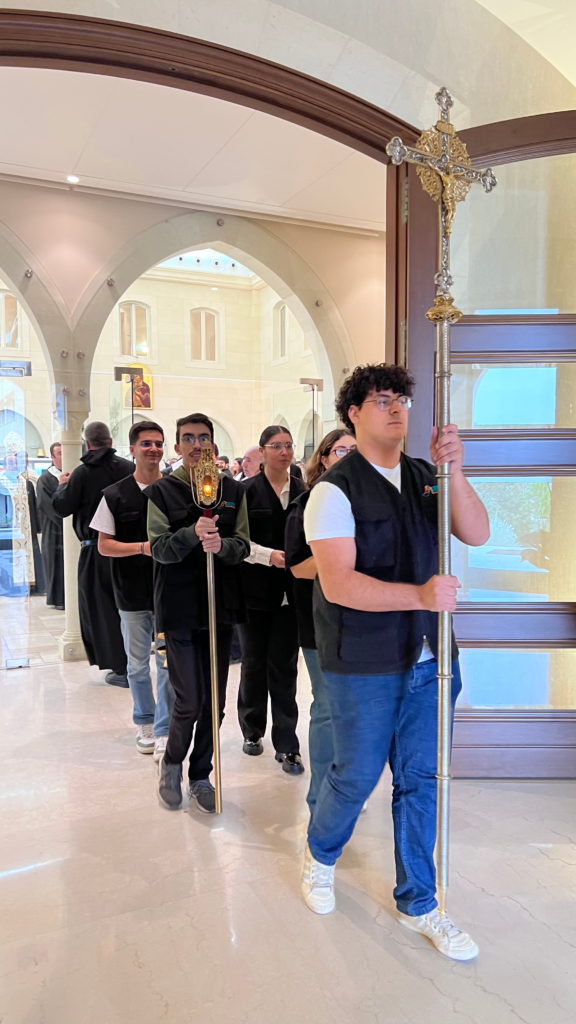
University chaplaincy in Lebanon is playing a crucial role as the nation faces one of the gravest economic crises in its modern history. Since 2019, structural corruption and financial collapse have pushed up to three-quarters of the population below the poverty line, leading to widespread despair and a 21.7% increase in the suicide rate. As many young people, particularly Christians, dream of starting over abroad, the country faces a devastating «brain drain» of the very people needed to build a better future.
Strength through university chaplaincy in Lebanon
Catholic university chaplaincies are working hard to encourage students to remain in the country and shape their society based on faith. At Baabda University, run by the Order of St. Anthony, ACN is supporting an intensified pastoral outreach program. This initiative focuses on listening to students, counseling them, and helping them overcome the grave psychological consequences of the national crisis.
The program includes shared prayer, scripture readings, spiritual retreats, and social involvement initiatives. It also features a vocations apostolate to witness the beauty of consecrated life and encourage young people to serve the Church.
Father Ruben Makol, the student chaplain, explains the program’s impact:
“The principal aim of this programme is to help the young people to have a genuine experience of the Lord and renew the sense of a bond with their Church and their country, so they can build up a sense of living community that will give them new meaning, hope and stability. We are witnessing real transformations among those who are travelling with us. They are more deeply rooted in their faith and showing a renewed and greater motivation for their studies ”.
A commitment to the future
The order itself has been heavily impacted by the economic crisis and cannot raise the funds to continue these activities on its own. To support this mission, ACN has promised a contribution of 17,200 Euros to benefit 300 students. This practical aid helps young people discover new hope and find a «second family» within their faith community.