
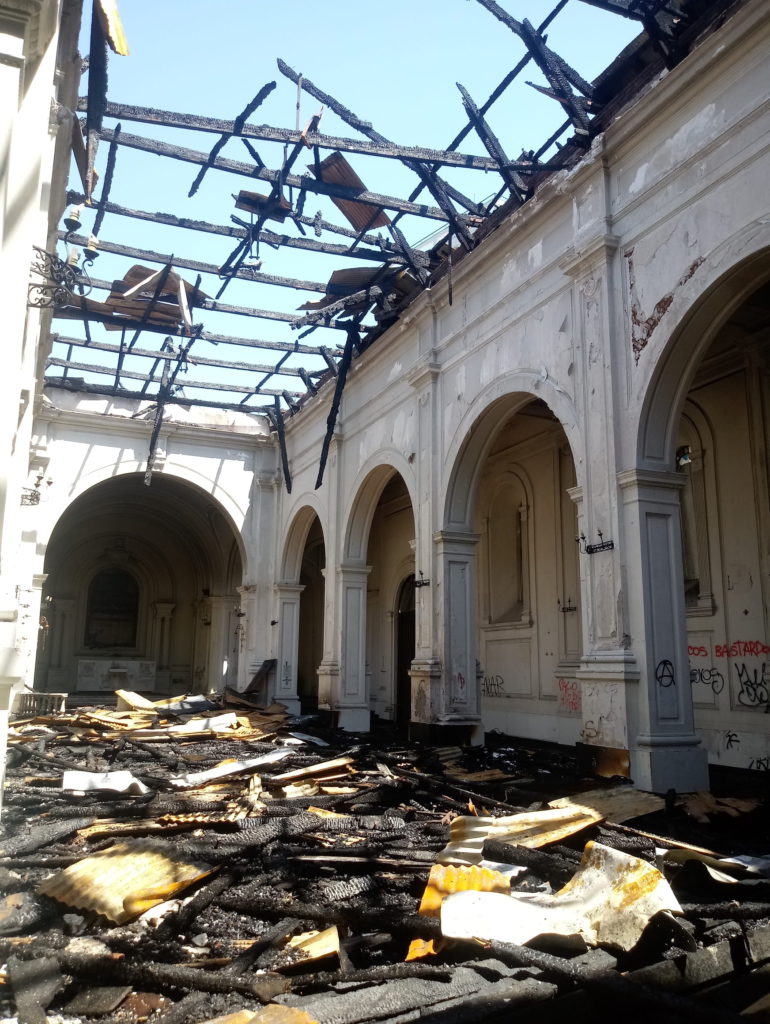
Religious persecution in Europe and the Americas has become a clear trend as the number of churches attacked or vandalised continues to rise across once-Christian nations. Despite the increasing frequency of these targeted offenses, Christians often lack the necessary legal instruments to fight back effectively against systematic discrimination and persecution. While limitations on religious freedom and open hostility are traditionally associated with escalating violence in regions of Africa and Asia, Western countries face internal problems that the ruling authorities tend to ignore or leave unaddressed.
Statistics on religious persecution in Europe and the West
These sobering statistics were compiled and presented by José Luis Bazán, an academic and specialist in human rights and anti-Christian persecution, who contributed to Aid to the Church in Need’s (ACN) Religious Freedom in the World Report (RFR) published in October 2025. The data gathered outlines a persistent wave of criminal damage directed against Christian places of worship.
In France, an average of 1,000 attacks take place against churches annually, consisting mostly of vandalism but also including a significant number of arson cases. In the United States, hundreds of attacks have been officially registered, with 371 incidents documented alone since the Supreme Court overturned the «Roe v. Wade» precedent in 2022. In the United Kingdom, security reports indicated over 9,000 cases of burglary, criminal damage, vandalism, and assault within a three-year period, representing an average of at least eight crimes per day between 2022 and 2024.
Latin American countries have experienced a parallel surge in attacks against Christian locations in recent years. In Chile, nearly 300 churches suffered arson attacks between 2013 and 2024, with the majority of these actions carried out by far-left activists. Bazán emphasized that specific public demonstrations often lead to targeted destruction:
“Every year, around 8 March, International Women’s Day, hundreds of churches – I repeat, hundreds – in Spain and Latin America are graffitied and vandalized by radical feminists with hate expressions such as, ‘The church that shines the brightest is the one which burns’”.
In several instances, this hostility has transitioned into a systemic problem as secularism expands throughout historically Christian territories, such as Belgium, which registers approximately 200 attacks every year, or Germany, which documented 111 attacks in 2024, a 20% increase from the previous year.
Institutional neglect and the challenge of underreporting
Despite the fact that this type of violence against Christian communities has become so widespread that it represents an institutional trend, government officials are doing almost nothing to protect the victims or secure their facilities. Bazán points to a severe imbalance in political representation within major international organizations:
“The European Union has a coordinator on anti-Semitism and another on anti-Muslim hatred. There is also a recently created post at the UN for anti-Muslim hatred, as there was already one for anti-Semitism. Why not a UN representative for anti-Christian hatred? We lack political instruments at the EU level and at the United Nations”.
This lack of political instruments stems from a widespread societal presumption that Christians constitute the absolute majority, and therefore, by definition, cannot be oppressed or targeted. However, Bazán warns that societies contain vulnerable subcategories and institutions, and that aggressive minorities can successfully target and attack majorities.
Furthermore, the academic notes that part of the problem lies with Christians themselves, who regularly fail to file official complaints. A survey conducted among Catholic priests in Spain revealed that while many had been subjected to physical or verbal assaults, the vast majority chose not to report the crimes, believing they should accept the hostility as part of the sacrifice of their pastoral ministry.
Laypersons reflect the same pattern, as the majority of Christians do not report hate speech unless it involves an exceptionally severe crime. This stance contrasts with other religious groups; for example, the British Muslim community produced a comprehensive handbook detailing exactly how to report incidents, containing clear examples of minor offenses that should be brought to court. Bazán stresses that Christians must learn from these strategies, as political leadership designs laws and enforces policies based on officially reported cases, never on unverified allegations or conjeturas. ACN’s report, published every two years, confirms that around two-thirds of the world’s population currently live in nations with severe restrictions on their religious freedom.