The Church in Petare has mobilized from one of the poorest and most densely populated areas of Caracas to care for the wounded arriving from La Guaira after the recent deadly earthquakes. To assist the local eclesial response, the pontifical foundation Aid to the Church in Need (ACN) has approved an emergency aid package of 100,000 euros. When the disaster struck Venezuela, Bishop Juan Carlos Bravo Salazar of Petare was in Merida, over 600 kilometers away; due to the cancellation of flights, he had to undertake a 16-hour trip by land back to his diocese. Upon arrival, he encountered an unexpected scene:
“Petare is one of the poorest and most densely populated areas of Caracas. They call it Latin America’s largest slum. You’d think that the poorer neighbourhoods would be the first to collapse in an earthquake, but Petare remained intact”.
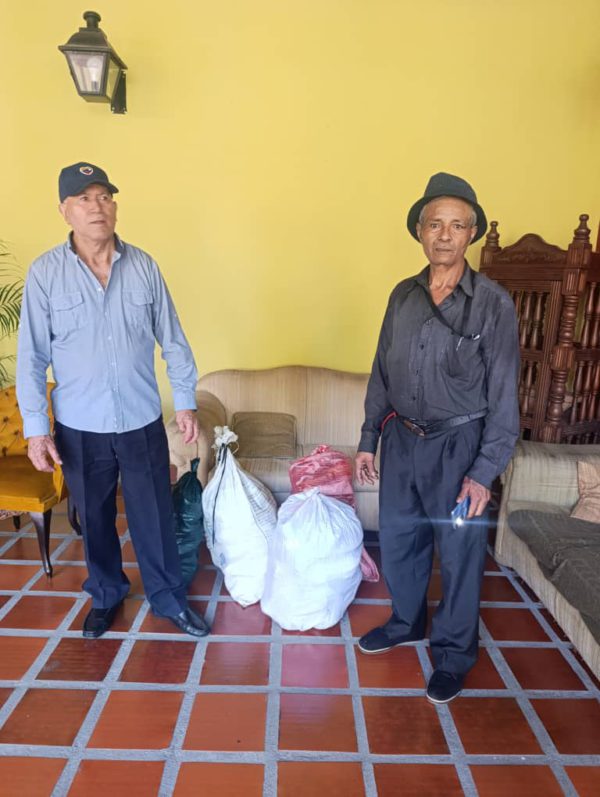
Relief work managed by the Church in Petare during the healthcare crisis
The Diocese of Petare, located to the east of Caracas, covers an area of 177 square kilometers and is home to approximately two million people distributed among 2,000 neighborhoods. Even though around 90% of the diocese lives in conditions of poverty, no deaths or wounded were recorded as a direct consequence of the earthquake because the area rests upon solid bedrock. However, the territory did suffer significant structural damage in churches, chapels, rectories, and several private homes.
Despite its own vulnerability, this emergency turned Petare into a critical launchpad for sending help to the wounded in La Guaira, the region hardest hit by the tremors. Since four of the country’s main hospitals are located within the boundaries of the diocese, they have been receiving the lion’s share of the wounded. Consequently, the local church focused its response on supporting these hospitals, where a severe shortage of basic medical supplies has worsened an already precarious situation. Through the diocesan branch of Caritas, the Church established four collection centers and successfully mobilized over 250 volunteers.
“We are providing medication, surgical equipment, cleaning materials and food, but also clothes, because many of those who arrive come with nothing at all”.
The bishop highlighted that the community’s response has been an extraordinary blessing from God:
“The generosity of the people has been enormous, a true blessing of God. Their willingness to help, to work together, to be present, to sort out clothes and medicine, or just to transport and carry the aid has been admirable. We can see God’s footprints and his presence in all we are doing”.
Testimonies of solidarity: love breaks down fear
Bishop Bravo recalled the moving case of a woman who arrived from La Guaira completely disoriented, unfamiliar with the area, with injured family members in the local hospitals, and unsure how to secure medication, clothing, or medical examinations. The volunteers accompanied her closely, secured everything she needed, and remained by her side. Overwhelmed by the situation, the woman collapsed and fainted. After being immediately assisted by doctors, paramedics, and youth volunteers, she explained through tears of relief that she had been overcome with emotion at being welcomed and helped freely in an unfamiliar place by people expecting nothing in return. The bishop reflected:
“Fear can break a person, but love breaks down that fear”.
The solidarity displayed across Petare has deeply touched the local Church, proving that the poor are its greatest treasure. The prelate shared an inspiring example of local generosity:
“Two men came to us. They are cobblers, they collect old shoes, fix them and sell them to make a living. They brought us 50 pairs of shoes they had fixed to sell, but instead decided to donate them to the people who had lost everything. Even those who have nothing give everything”.
For the bishop, this gesture highlights how God works out of nothing, revealing an immense human and spiritual wealth where material resources are nearly nonexistent. He also praised the exemplary role of the youth, recounting a night when a large truck loaded with water, mattresses, food, and medicine arrived late at one of the collection centers. The local youths did not hesitate; they arrived immediately and fully unloaded the truck in just 15 minutes with joy, discipline, and without seeking attention, simply wanting to be there as brothers to accompany and support.
Holistic accompaniment and brotherhood with ACN
In addition to material relief, the diocese emphasizes providing spiritual and human accompaniment to the victims, volunteers, and healthcare workers. Bishop Bravo explained that pastoral care cannot focus solely on psychological assistance but must include spiritual aid—not as an evasive spiritualism, but as a deep humanization from the perspective of Jesus. To guide the community through this crisis, the prelate proposed three key words:
“Prudence, calm and patience. In times like this we have to be prudent to look after ourselves as well as others. We need to be calm, because one should not be rash in times of pain. And we need patience to begin a process that takes more than just a few days, because even if you want to speed things up, there are times when you need to know when and how to move ahead”.
Finally, the bishop highlighted the profound meaning of the emergency fund provided by ACN, which allows for a flexible response to immediate care and pastoral support in the affected dioceses. Above all, Bishop Bravo asked ACN’s friends and benefactors for prayer and proximity, concluding with a powerful description of the foundation’s identity:
“To us, ACN means to be able to count on brothers who are always willing to stretch out their hand to us. More than asking for things, I would like ACN to continue with its charisma and avoid becoming one more bureaucratic or social aid institution, instead of a community that generates brotherhood”.