
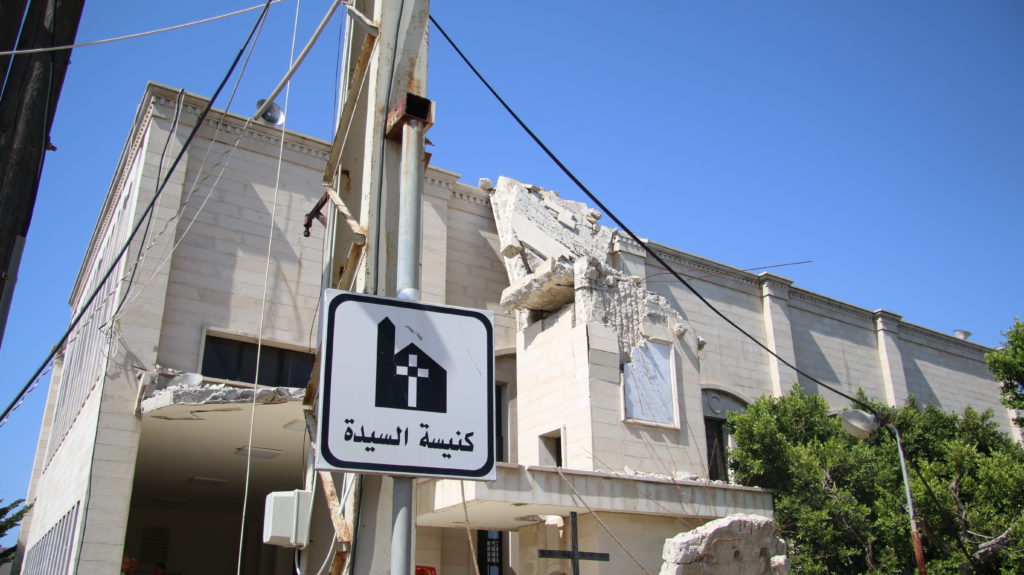
The recent bombings in Lebanon have left people feeling “scared, angry and sad” after more than 100 bombs fell across Beirut in a single night. On April 8, the Israel Defense Forces (IDF) launched a massive wave of strikes, killing at least 254 people and injuring more than 1,000. Following U.S. President Donald Trump’s announcement of a ceasefire with Iran on April 7, Israeli Prime Minister Benjamin Netanyahu stated there is “no ceasefire in Lebanon”.
Humanitarian crisis and daily survival
Marielle Boutros, ACN project coordinator, explained that the city-wide attacks shattered the safety people thought they had in their own homes. The collapse of the 2024 ceasefire on February 28, following the death of Ayatollah Ali Khamenei, has led to over 1,800 deaths, including 120 children.
“You feel you are being dehumanised. You call your relatives, and you are relieved that they are okay, then you have 200 dead and nearly 2,000 injured. You don’t feel safe. Some of the victims were in their houses, in a secure and comforting place, and they were bombed”.
By March 31, the Lebanese Army withdrew from the Christian villages of Rmeich and Ein Ebel, leaving them within Israel’s buffer zone. Despite the economic crisis and growing anxiety, there is a constant pressure to continue daily life for survival.
Christian values and education amidst the bombings in Lebanon
Reopening schools and paying teachers remains a critical emergency for the region. Education in Lebanon has faced constant interruptions since 2019, and the Church views these institutions as vital strongholds for the community.
“For the Church too it’s very important as it’s where catechism takes place. It’s a place for missions, for preaching, for transferring Christian values and living those values. These are key elements for society here”.
ACN continues to support Lebanon through food parcels, medical aid, and fuel for displaced families. Additionally, the charity provides psychological support and trauma healing for children affected by the ongoing violence.