
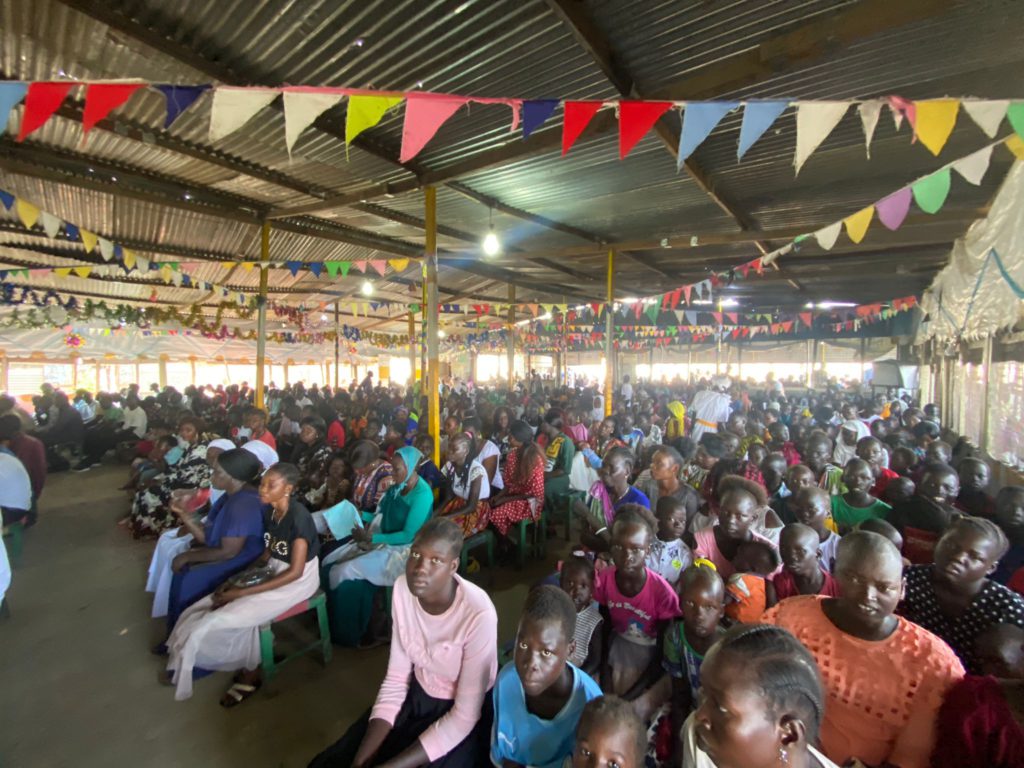
The Diocese of Malakal in South Sudan has undergone a spiritual and material rebirth under the leadership of Bishop Stephen Nyodho, who found absolute devastation upon his appointment. After the civil war began in 2013, the city of Malakal was left without buildings, services, or a flock, forcing the bishop to rebuild trust before addressing the physical infrastructure.
The rebirth of the Diocese of Malakal
When Pope Francis named him bishop in 2019, Stephen Nyodho returned to a hometown where only around one thousand people remained. His commitment to staying in Malakal, despite the lack of basic facilities, became a beacon of hope for thousands of displaced persons living in UN camps or abroad.
“When I went back, there was nothing, not even a chair or table, nothing. I had to start from zero. Many churches, many chapels, including all the other institutions of the Church had been destroyed, nothing remained. When I first saw it, I cried, because this was the town where I was born, where I grew up”.
Today, the population has surpassed 20,000 people, and schools are once again full of children.
Rebuilding peace and overcoming challenges
The Diocese of Malakal prioritizes “social coexistence” and peacebuilding. Bishop Nyodho focused on opening the town’s only radio station first to heal divisions among local people. His mission expanded in 2023 when a civil war erupted in neighboring Sudan; the bishop arranged for boats to rescue more than 10,000 exhausted displaced people stranded on the banks of the White Nile.
Rebuilding efforts in the region face unique financial obstacles:
-
High construction costs: Malakal is considered one of the most expensive places for construction globally.
-
Transportation expenses: Due to road and boat transport costs, a bag of cement costs 50 USD in Malakal compared to 15 USD in the capital, Juba.
Bishop Stephen Nyodho expressed his gratitude to Aid to the Church in Need (ACN) benefactors, urging them to continue walking this journey of suffering alongside the suffering people of South Sudan.