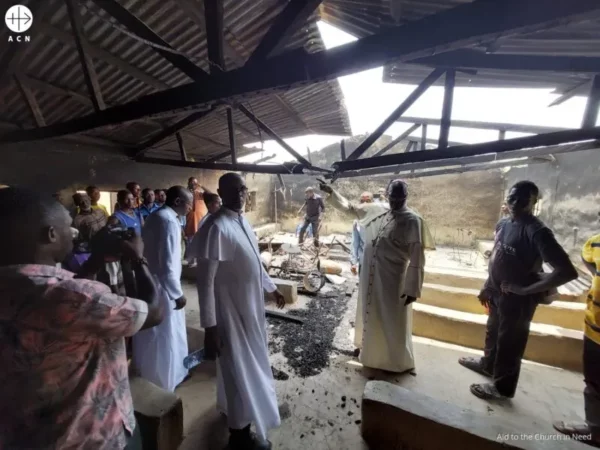
According to leading Church figures, over 100 people have been killed and 90,000 displaced in the Taraba State region since September 2025. Following a fresh massacre, the Church in Nigeria’s Middle Belt has again called for action to address extremist violence.
Ten villagers died in Tuesday’s (February 10) attack on Mchia in Taraba State, north-eastern Nigeria, apparently carried out by militant members of the Fulani herder community. On February 12, senior clerics from the Wukari Diocese issued a statement stressing that this was only the latest in a long line of atrocities.
“More than 100 persons have been killed so far, several others injured with various degrees of injuries, while over 200 communities and churches have been destroyed and the residents, numbering over 90,000 Catholics, displaced.”
A Growing Humanitarian Crisis
In the statement, a copy of which was sent to the pontifical charity Aid to the Church in Need (ACN), priests Anthony Bature, James Yaro, Moses Angyian, and Augustine Chifu emphasized that violence has increased in southern Taraba since September 2025, and the area is now facing a “crisis situation.”
The senior clerics described a pattern of systematic attacks: assailants usually enter villages early in the morning while most people are sleeping, killing anyone in sight and destroying property. They specifically noted that “priests’ residences and Church buildings are targeted and destroyed.”
Urgent Appeals to the Government
While acknowledging the work of security agencies, the priests appealed for decisive action to end the carnage in Chanchanji Ward and other parts of Takum, Ussa, and Donga. Their key calls for action include:
-
Security Mobilization: Urgent deployment of personnel to the outlying areas where attacks are occurring.
-
Justice and Prosecution: Ensuring the arrest and prosecution of those responsible, regardless of ethnic, political, or religious affiliations.
-
Emergency Aid: A concerted effort to provide food, bedding, and medicine to Internally Displaced Persons to avert a major humanitarian disaster.
-
Constructive Dialogue: Engagement between traditional rulers, religious leaders, and security agencies to foster long-term stability.
“The bishop, priests, religious and the laity of the Catholic Diocese of Wukari are not discouraged, but convinced that with God on their side and with sustained prayers and collaborative efforts between the Church and the State, lasting peace can be achieved.”