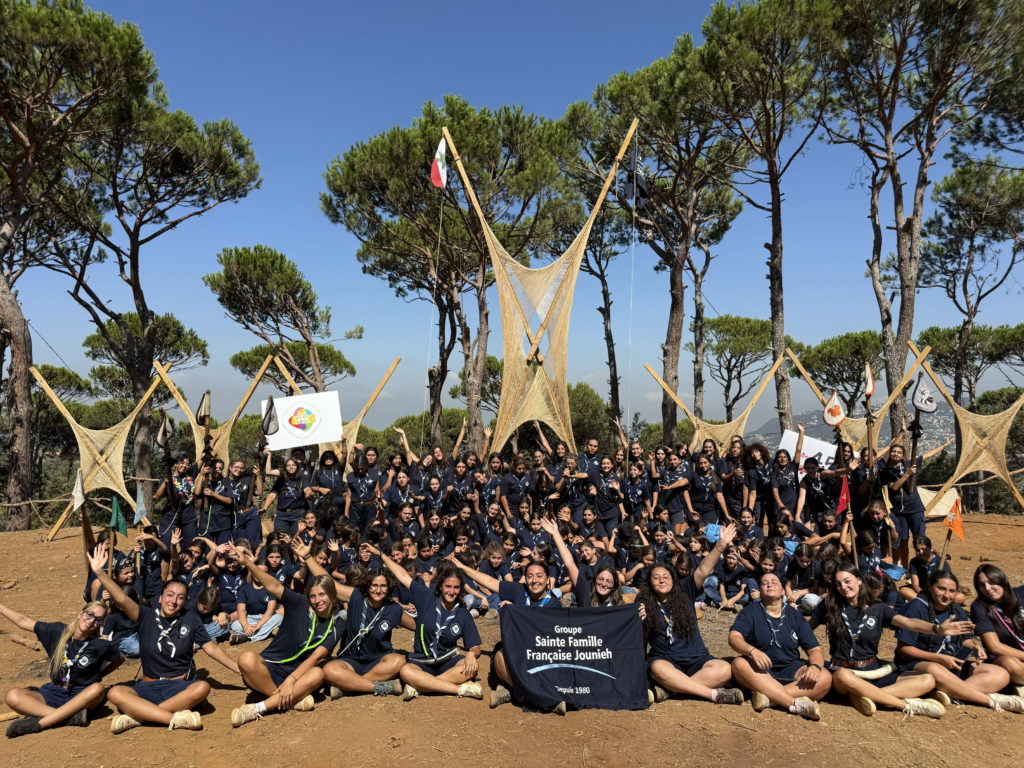
Summer camps in Lebanon funded by the pontifical foundation Aid to the Church in Need (ACN) are benefiting 7,465 children and young people across different regions of the country, providing them with a refuge from ongoing war. Today, organizing a few days of activities for youth in Lebanon has become a true obstacle course; yet, for the local Church, these gatherings are more necessary than ever. A total of 61 camps are organized and accompanied by local dioceses, parishes, and Church movements. This initiative forms part of an international programme through which ACN is funding 407 camps in 11 countries affected by war, displacement, poverty, or instability, with Lebanon having the second-highest number of participants after Syria.
Organization and challenges of summer camps in Lebanon
In the Melkite Greek Catholic Archeparchy of Saida and Deir El Qamar in southern Lebanon, logistics require constant adaptation to an unpredictable security situation. Joelle Feghali, a member of the Marian Apostolic Movement (MAM), explained the difficulties faced during preparation to ACN:
“The first venue we had booked was in Joun, in the Chouf district, and could be reached via Saida. With the war, we found ourselves at an impasse: we had to cancel the booking, begin searching for another suitable place — an almost impossible task — and wonder until the very last moment whether there would actually be a camp this year.”
“We had to start all the preparations again from scratch. Organising a camp has become a journey filled with obstacles, major decisions that must be taken urgently and challenges that can appear never-ending.”
Added to these logistical hurdles is the exhaustion experienced by the leaders and volunteers themselves, who must carry out their duties while facing the same economic, family, and security uncertainties as the rest of the population. Regarding this issue, Feghali stressed the importance of reminding leaders of their vocation:
“We have to remind the leaders of the deeper meaning of their vocation. It is a commitment to which they remain profoundly attached, but one which can sometimes become difficult to bear.”
Hidden psychological wounds and pastoral impact
The 2024 war caused mass displacement alongside severe material and emotional damage. Before many children had time to recover, the new escalation that began in March 2026 once again forced hundreds of thousands of families to flee their homes, deepening children’s psychological wounds. Representatives of the Marian Apostolic Movement report a worrying increase in anxiety, isolation, sleep disorders, fear of loud noises, self-harm, suicidal thoughts, dependence on medication, and psychosomatic disorders. Furthermore, some young people cannot attend because they have to work to support their families, while others are kept away by parents fearing security risks.
Against this backdrop, the camps provide a safe environment where participants can express their fears, regain routine, and build relationships of trust. Jennifer Hajj, vice-president of the MAM, highlighted the visible transformation among participants:
“Many have grown up in a climate of anxiety, fear and insecurity. Some have been directly affected by the conflicts, while others live with the consequences of the economic difficulties weighing upon their families. Even when they do not express their suffering in words, it can be seen in their eyes, their silences and their behaviour.”
“As the days pass, we often witness a genuine transformation. Children and teenagers who were withdrawn gradually begin to smile again. They make new friends, regain confidence in themselves and discover that they are welcomed, listened to and loved. The camps offer them a place where they can finally breathe, laugh, play, pray and recover a sense of security that is sometimes no longer present in their daily lives.”
“Every camp strengthens my conviction that just a few days can change a life. Seeing a child or teenager leave happier, calmer and filled with hope reminds us that every effort, every sacrifice and every hour devoted to this mission is worthwhile.”
Pastoral care continues throughout the year through weekly meetings and personal encounters organized by the MAM. In addition, the camps enable teenagers and young adults to assume responsibility as group leaders, becoming positive builders of peace within their communities.
Cultural resistance and eclesial commitment
For Archbishop Elie Béchara Haddad, Melkite Greek Catholic Archbishop of Saida and Deir El Qamar, maintaining these activities amid the war represents a deliberate choice in favor of life:
“Organising summer camps for our children, young people and families is not simply a seasonal activity. It is an act of cultural resistance, a testimony of unwavering faith and a vital necessity.”
The archbishop described the camps as «a safe space offering spiritual and psychosocial oxygen», expressing deep appreciation to international benefactors:
“By supporting our summer camps, you are not funding an ordinary holiday. You are funding the continuity of our presence, the healing of our children and the future of our young people.”