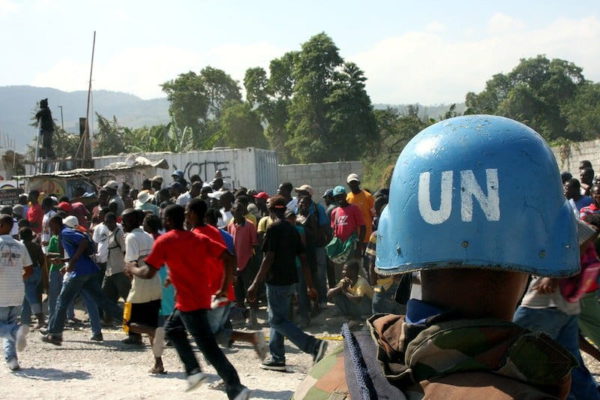
Church in Haiti remains standing, sowing hope in the midst of despair, as the country sinks into an unprecedented crisis corroded by armed gangs. The legislative and presidential elections due to be held on 30 August — the first since the assassination of President Jovenel Moïse in 2021 — have been postponed until December. However, holding elections still seems like a distant dream in a nation where armed gangs control between 70% and 90% of the capital, Port-au-Prince, as well as the strategic departments of Artibonite and Centre.
At the end of 2025, the president of the Provisional Electoral Council warned that the restoration of security is a prerequisite for holding the first round. By collecting illegal tolls on major roads, gangs have become the real masters of the country. Their expansion dates back to the 1990s, when President Aristide dismantled the army and created a parallel militia, reaching a turning point in 2018 when the government used them to quell a widespread popular revolt. Since then, they have expanded their influence through murders and kidnappings with complete impunity.
Persecution of the Church in Haiti and parish closures
Because it is the only institution that openly denounces gang control, the Church has become a priority target. Bishop Joseph Gontrand Décoste, of the Diocese of Jérémie, explained the situation to the foundation Aid to the Church in Need (ACN):
“We are the last remaining retaining wall: moral, ethical, spiritual and prophetic… That is why they want to eliminate us”.
The impact across the country’s ten dioceses is severe. In Port-au-Prince, forty parishes have had to close, alongside around fifteen in the central plateau and another ten in Artibonite. Direct attacks against religious personnel underline the tragedy:
-
31 March 2025: Sisters Evanette and Jeanne, of the Little Sisters of Saint Thérèse of the Child Jesus, were killed by armed gangs in Mirebalais.
-
First seven months of 2026: One seminarian was murdered, and two priests were kidnapped.
-
2024 Toll: Nine religious sisters, five brothers, and four priests were kidnapped.
Additionally, numerous religious institutions and Catholic schools — some with over a century of history — have been stormed, burned, or turned into gang bases.
Pastoral resilience and community faith
In the face of terror, pastoral work continues through constant adaptation. The Church has established online teaching programmes, welcomed thousands of displaced people in southern and western dioceses, broadcast Masses via diocesan radio stations, and maintained pilgrimages whenever possible. Bishop Décoste highlighted the spiritual strength of the people:
“In Creole we say: ‘Pitit Manman Marie pa janm pèdi batay’, which means: ‘The children of the Virgin Mary never lose a battle!’ That is why we keep going”.
Small miracles still occur: in the “Village de Dieu” area of Port-au-Prince, controlled by gangs, Saint Bernadette parish had been forced to close, but the gangs themselves demanded that it reopen to celebrate its patronal feast.
Meanwhile, nearly 200 seminarians at Our Lady of Perpetual Help Interdiocesan Major Seminary in the capital continue their studies, occasionally taking shelter under their beds to avoid stray bullets and risking dangerous journeys to local parishes.
“We keep praying, singing and dancing. In Haiti we say: ‘As long as they haven’t cut off our head, we still have hope of wearing a hat.’ That is why we never lose hope”.
“This capacity for resilience is possible thanks to the great support we feel from organisations like Aid to the Church in Need (ACN). Your prayers sustain us enormously; without them we could not carry on. Thank you very much from the bottom of my heart!”.
ACN supports the Church in Haiti through initiatives such as diocesan radio stations, solar energy projects, and assistance for the formation and sustenance of priests, religious sisters, and catechists.