
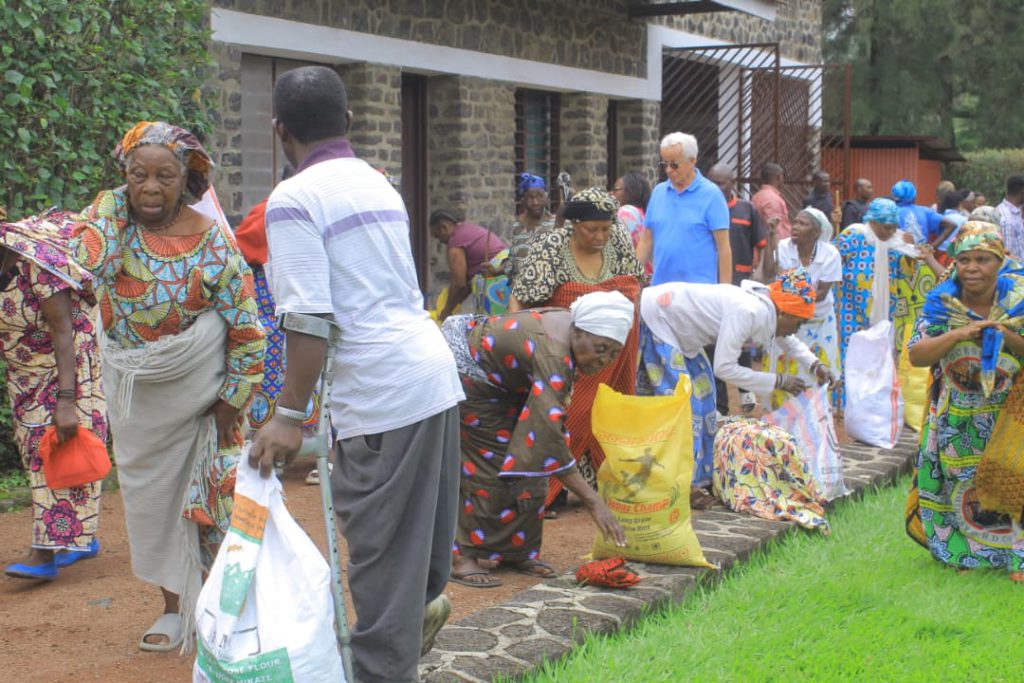
The Church in Goma, in eastern Democratic Republic of the Congo (DRC), continues its pastoral mission among the local population despite the war and disruption that have gripped North Kivu since the armed M23 group seized control of the city in January 2025. Speaking at the international headquarters of Aid to the Church in Need (ACN), the Vicar General of the Diocese of Goma, Mgr Henri Chiza, highlighted the perils faced by local clergy:
“When we have to travel and move around, it is normal to be afraid and aware that there are dangers”.
While movement within urban centres generally remains possible, travelling beyond them has become particularly difficult. Located on the border with Rwanda, the capital of North Kivu lies at the heart of a region marked by decades of armed conflict and regional instability. Following the January 2025 offensive by the March 23 Movement (M23), displacement camps emerged across Goma and neighbouring parishes. The Church mobilized immediately: local Catholic schools gathered food and essential supplies, while the diocesan bishop and religious communities coordinated relief distributions. Although some families have since returned to their home villages, displacement has left behind deep trauma, disorientation, and mourning.
Meanwhile, military conditions remain deadlocked and precarious. As Mgr Chiza explained:
“Each side remains in its position, the fighting parties are entrenched, and there is no contact between the opposing forces”.
Sporadic fighting persists without a foreseeable resolution. The conflict has severely damaged the regional economy: roadblocks and restrictions have paralyzed trade, commercial banks and businesses have shut down, and local citizens reap virtually no benefit from the area’s rich mineral reserves, which include gold, lithium, and diamonds.
Remaining close to the faithful: the mission of the Church in Goma
Confronted with armed conflict and suffering, the Church remains resolute in its commitment to serve the local community while staying clear of the political agendas of armed factions. Mgr Chiza underscored this stance:
“We simply try to stay within our field and continue the work of evangelisation, which is our reason for being and our motivation. Overall, we have not closed any parish”.
In Birambizo, a parish whose premises had been destroyed has reopened, with two priests and a deacon returning to resume pastoral life. Across the diocese, priests have refused to abandon their posts, even as persistent insecurity, severe material deprivation, and community trauma place heavy demands on their ministry.
This ecclesial presence is particularly vital for younger generations. Many young people, some now in their thirties, have never experienced peace in their lifetime. To them, Mgr Chiza offers a firm message of hope:
“War will not have the final word!”.
Through homilies, diocesan schools, and parish initiatives, the Church strives to guide young people toward purpose amid widespread instability and keep alive the conviction that peace will return.
Clergy sustenance and partnership with ACN
ACN supports the Church in Goma through multiple initiatives, including assistance for seminaries and seminarians, scholarships, funding for the construction of religious houses and monasteries, and Mass stipends for priests. While local Catholics traditionally support their clergy, severe economic collapse has made parish contributions exceedingly rare. Mass stipends provide priests with the means to secure basic necessities, such as clothing and footwear, and occasionally assist dependent relatives, allowing them to remain dedicated to their pastoral work.
During his visit to ACN’s international headquarters, the Vicar General expressed gratitude to benefactors for aid that has had “a considerable impact on the diocese and on the well-being of its people”, recalling the vital relief delivered during peak crises:
“During the worst moments of the war, we received assistance from ACN simply to feed ourselves, to stay alive”.
He concluded by asking benefactors to pray for lasting peace in the DRC, for priests and religious sisters, and for all civilians enduring violence:
“The most important bond we must build is the bond of prayer”.
Mgr Chiza reaffirmed that the local Church knows it is not forgotten, drawing comfort from the prayers of the Pope, the communion of the universal Church, and the steadfast solidarity of ACN benefactors.