
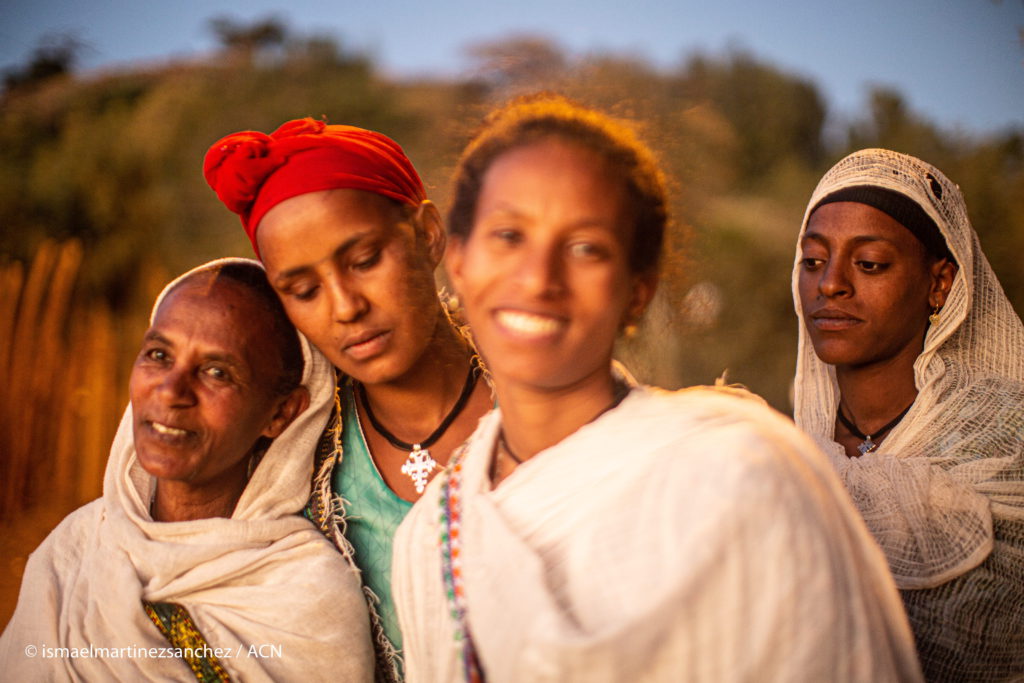
Christians in Ethiopia face a devastating wave of violence after attacks on Orthodox communities in Oromia left at least 60 people dead, including elderly people and children, amid renewed conflict and mounting fears of deeper instability across the country. In response to the bloodshed, the Catholic Church in Ethiopia has renewed its urgent appeal for peace and the robust protection of civilians.
The assaults occurred on 20 October in Merti district and on 24 October in Shirka district, both situated within the Arsi zone of Oromia. Media reports confirmed that armed assailants in Shirka moved from house to house, killing residents with firearms and knives. At least one church sustained structural damage during the onslaught, while ecclesiastical buildings in neighbouring villages provided shelter to families fleeing the area.
The events have raised alarm that religious animosity could intertwine with Ethiopia’s intricate network of territorial, political, and ethnic tensions. The regional government of Oromia blamed armed rebel factions for orchestrating the massacres to incite sectarian clashes, though the claim has not been independently verified and responsibility remains contested.
Escalating conflict and the plight of Christians in Ethiopia
This wave of attacks coincides with renewed hostilities in northern Ethiopia, reviving fears of an escalation reminiscent of the Tigray conflict. While the 2022 Pretoria Agreement officially ceased major fighting, unresolved territorial claims, the plight of internally displaced populations, and friction between federal and regional bodies continue to threaten stability. In recent weeks, clashes involving the Tigray People’s Liberation Front (TPLF), allied armed groups, and federal forces spread into parts of Tigray, Afar, and Amhara.
Ethiopia’s Catholic bishops issued a public statement affirming that the Church «grieves deeply over the armed conflict that is currently present in Tigray, Afar, Amhara, Oromia and other regions», warning:
“rather than resolving differences, war serves only to deepen divisions and multiplies suffering”.
The prelates stressed that war leaves behind loss of human life, material destruction, and «seeds of hatred, resentment, and vengeance that may endure for generations».
Bishop Lesanechristos Matheos of the Catholic Eparchy of Bahir Dar-Dessie addressed these concerns in a pastoral letter sent to Aid to the Church in Need (ACN) on 3 October. He expressed heartfelt concern for populations enduring «fear, insecurity, displacement, loss, and uncertainty», urging all people of good will to embrace wisdom and prayer rather than division:
“Every life lost is a tragedy”.
Bishop Matheos underscored that pursuing peace does not imply keeping silent in the presence of injustice; rather, it requires defending human dignity, safeguarding the vulnerable, and rejecting «hatred, rumours, misinformation, and words that inflame conflict».
Overlapping conflicts and religious demographics
According to ACN’s 2025 Religious Freedom Report, peaceful coexistence in Ethiopia remains fragile as regional rivalries and historic grievances fuel instability. Faith communities frequently find themselves caught in wider social strife, while the politicisation of religious identity challenges communal cohesion.
-
Ethiopian Orthodox Tewahedo Church: Makes up roughly 44% of the population, representing the country’s largest religious group.
-
Muslims: Account for approximately 34% of the populace.
-
Evangelical and Pentecostal Christians: Represent about 19% of citizens.
-
Catholics: Comprise approximately 0.7% of the total population.
Religious affiliation fluctuates substantially across regional states, often intersecting directly with ethnic background and political lines.